For many lipedema patients, recovery time is one of the most significant factors in deciding whether and when to pursue surgery. If downtime is a concern for you, understanding how different surgical techniques affect recovery is an important part of that conversation. Byrd Lipedema Surgery Center offers consultations to help patients evaluate their options at (770) 587-1711 or through our online contact form.
Lipedema liposuction is not a single technique. Surgeons working in this specialty use different approaches, and the method chosen has real consequences for how the body responds during recovery. Water-jet assisted liposuction is one technique that has drawn attention from patients and specialists alike for its tissue-preserving properties, particularly in the context of a condition where lymphatic function is already a concern. Here is what distinguishes this approach and why it may mean a gentler recovery for appropriate patients.
How Does the Water-Jet Technique Separate Fat While Sparing Surrounding Tissue?
In conventional liposuction, the mechanical action of removing fat involves disruption of the surrounding connective tissue, nerves, and blood vessels, as well as the lymphatic structures that run through fatty tissue. For patients with lipedema, those lymphatic structures are already compromised to varying degrees, which makes the question of surgical trauma particularly relevant. A technique that minimizes collateral disruption during fat removal is not just a matter of comfort during recovery. It is a consideration that intersects with the underlying pathology of the condition being treated.
Water-jet assisted liposuction uses a precisely controlled fan-shaped stream of tumescent fluid delivered through a thin cannula to gently loosen fat cells from the surrounding connective tissue matrix before and during their removal. Rather than relying primarily on the mechanical force of the cannula moving through tissue, the water-jet action does much of the separation work in a way that is designed to preserve the surrounding structures. Blood vessels, nerves, and lymphatic channels that are more mechanically robust than the fat cells themselves can remain more intact when the separating force is fluid rather than blunt instrument movement.
This distinction matters because the degree of tissue disruption during surgery is one of the primary drivers of post-operative bruising, swelling, and discomfort. Less trauma to the surrounding tissue means less inflammatory response, which in turn means the body has less to resolve during the recovery period. For patients whose lipedema has created significant tissue changes across large treatment areas, that difference in the body's post-surgical burden can translate into a meaningfully different recovery experience.
Why Can Less Surgical Trauma Mean Less Bruising and Swelling After Surgery?
Bruising and swelling after liposuction are the body's response to disrupted blood vessels and the inflammatory cascade that follows surgical trauma. When small blood vessels are damaged during fat removal, blood leaks into the surrounding tissue and produces the bruising that patients see in the days after surgery. Swelling reflects both the body's fluid response to that trauma and the accumulation of lymphatic fluid in areas where lymphatic drainage has been temporarily disrupted by the procedure.
In patients with lipedema, swelling after surgery requires particular attention because the lymphatic system is already functioning below its normal capacity in the affected areas. A surgical technique that preserves more lymphatic tissue and causes less vascular disruption creates a post-operative environment that is easier for that already-stressed system to manage. The result, for patients who are appropriate candidates for the water-jet approach, is often less pronounced bruising and a faster resolution of post-operative swelling compared to techniques that involve greater mechanical disruption.
It is worth being precise here: water-jet assisted liposuction is not a zero-trauma procedure, and every patient's response to surgery is individual. Swelling and bruising are expected after any liposuction, and the degree to which a patient experiences them depends on the extent of the treatment area, their individual healing response, how closely post-operative care instructions are followed, and other factors specific to their health history. What the technique can offer appropriately selected patients is a reduction in one significant source of post-operative burden, not an elimination of recovery altogether.
What Does a Typical Recovery Timeline Look Like for Lipedema Patients?
Recovery from lipedema liposuction is a process that unfolds over weeks and months rather than days, and the water-jet technique does not change that fundamental timeline as much as it can change the quality of the early recovery period. Understanding what to expect at each stage helps patients plan realistically and avoid the frustration of expecting to feel fully recovered before the healing process has had time to complete.
In the first one to two weeks after surgery, most patients experience the peak of swelling and bruising, some discomfort at the treatment sites, and fatigue from the body's healing response. Compression garments are worn consistently during this period to support lymphatic drainage and help the treated tissue settle. Most patients are up and moving within a day or two of surgery, and light activity is encouraged to support circulation, but strenuous physical activity and anything that raises the heart rate significantly is restricted during this phase.
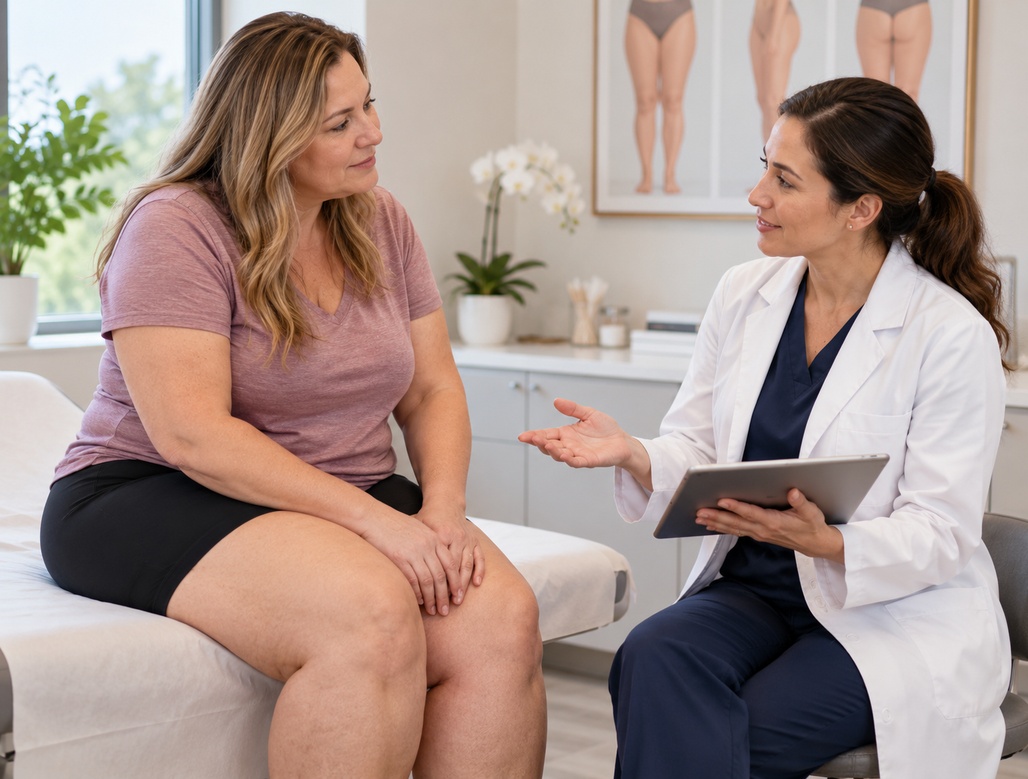
We spoke with a patient who was weighing lipedema surgery while managing a demanding schedule as a single mother. Her primary concern was how much time she would need to step back from work and family responsibilities during recovery. We explained how water-jet assisted liposuction can offer a gentler recovery experience for patients who are good candidates for the technique, walked through what the early recovery period realistically involves, and completed a careful evaluation to determine whether this approach was appropriate for her situation. She left the consultation with a clear picture of what recovery would look like for her specifically, and the confidence that there was a surgical path designed to minimize the disruption to her life as much as the medicine allows.
By weeks three through six, most patients see a significant reduction in swelling and begin to feel more like themselves. Many return to desk work and light daily activities within the first two weeks, though the timeline varies based on the extent of the treatment area and the individual patient's response. The final results of lipedema liposuction continue to develop for six months to a year as the remaining swelling resolves and the treated tissue matures.
Why Should Technique Choice Be Made With a Lipedema Specialist?
Not every liposuction technique is appropriate for every lipedema patient, and not every surgeon who performs liposuction has the training and experience required to approach lipedema specifically. The condition involves tissue characteristics, lymphatic considerations, and treatment planning requirements that differ meaningfully from cosmetic liposuction, and the selection of surgical technique should be made within that context rather than applied as a one-size approach across all patients.
A lipedema specialist evaluates the distribution and severity of lipedema tissue, the condition of the lymphatic system in the affected areas, the patient's overall health, and their goals and recovery considerations before recommending a technique. Water-jet assisted liposuction is not the right choice for every patient or every treatment area, and a specialist who is honest about those nuances is one whose recommendation you can trust. The consultation is the right place to ask directly whether this technique is appropriate for your specific situation, what the realistic recovery expectations are for someone with your history and treatment area, and what the surgeon's experience with this technique in lipedema patients specifically looks like.
If you are evaluating lipedema surgery and want to understand whether water-jet assisted liposuction is the right approach for you, call Byrd Lipedema Surgery Center at (770) 587-1711 or schedule a consultation to discuss your options with a specialist who focuses on this condition.