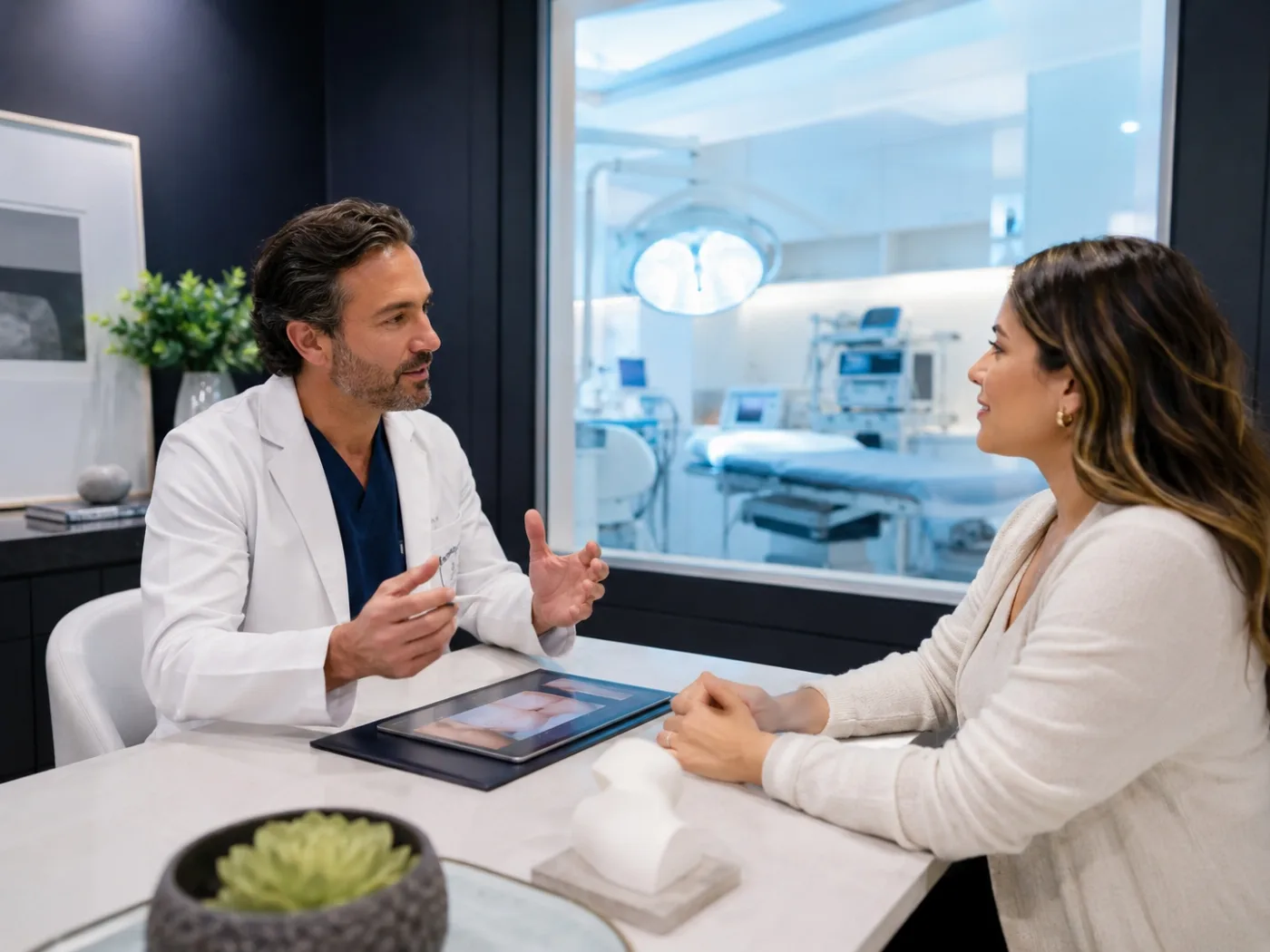
Yes, it matters whether you choose a general plastic surgeon or a surgeon who focuses specifically on lipedema. Lipedema tissue can become dense and fibrotic, while treatment must also account for lymphatic structures, blood vessels, symptoms, and disease stage. For patients near Canton Street in Roswell, specialization can directly influence how surgery is planned.
If you are considering surgery near the Chattahoochee Nature Center, call (770) 587-1711 or contact Byrd Lipedema Surgery Center to schedule a specialized consultation before choosing a provider.
Patients coming from around Roswell's Historic District may find that Byrd Lipedema Surgery Center approaches surgery as treatment for a medical condition rather than ordinary cosmetic fat removal. Its protocols, technique selection, and patient care are centered specifically on lipedema.
Lipedema Fat Is Not Ordinary Cosmetic Fat
Lipedema is more complex than having unwanted fat in a particular area. As the condition progresses, fatty nodules can become larger, harder, and more fibrotic. Patients may also experience pain, swelling, tenderness, heaviness, easy bruising, and reduced mobility.
Fibrosis matters during surgery because dense tissue can be more difficult to remove. A technique that may work well for ordinary cosmetic contouring is not automatically the best approach for diseased, fibrotic tissue.
Lipedema treatment also requires careful consideration of the surrounding lymphatic system, connective tissue, nerves, and blood vessels. These structures are particularly important when planning a procedure intended to reduce symptoms rather than simply change body shape.
That is why experience with lipedema itself matters. The surgeon needs to recognize how the disease behaves and how tissue characteristics may change the surgical plan.
General Liposuction and Lipedema Surgery Have Different Goals
Traditional cosmetic liposuction generally focuses on contour and localized fat reduction. Lipedema surgery has broader goals.
Patients may be seeking relief from pain, heaviness, swelling, mobility limitations, and the progression of abnormal tissue. The operation therefore needs to be planned around the disease pattern as well as appearance.
A surgeon who regularly treats lipedema evaluates where the affected tissue is located, how fibrotic it has become, which areas should be prioritized, and whether more than one procedure may be appropriate.
This does not mean a general plastic surgeon cannot be highly skilled. It means that lipedema-specific experience adds another layer of knowledge that is directly relevant to this condition.
Technique Selection Should Match the Tissue
A dedicated lipectomy surgery center does not necessarily use one liposuction method for every patient.
Byrd Lipedema Surgery Center offers water-jet assisted liposuction, or WAL, which uses a fan-shaped stream of fluid to gently separate fat cells before they are removed. The center emphasizes its lymph-sparing approach and reduced trauma to surrounding connective tissue, nerves, and blood vessels.
For dense or fibrotic areas, ultrasonic assisted liposuction, or UAL, may be considered. This technique uses ultrasonic energy to liquefy fat cells before extraction and is specifically described by the center as useful for dense fat deposits and areas of fibrosis.
The important point is not that one technique is universally better. Specialized treatment means evaluating the patient's tissue first and selecting the approach that fits that tissue.
Why Incomplete Treatment Can Affect Symptom Relief
For someone with lipedema, the goal is not simply to remove enough fat to produce a visible cosmetic change.
If difficult or fibrotic diseased tissue is not adequately addressed, the patient may not receive the degree of symptom improvement they hoped for. At the same time, aggressive treatment without appropriate attention to surrounding structures can create unnecessary risk.
This balance requires surgical precision.
A lipedema-focused surgeon understands that treatment may involve different areas, different tissue densities, and sometimes different techniques. The plan should be built around those variables rather than using the same approach for every body.
For patients who have already spent years being told their symptoms were simply caused by weight, that distinction can be especially important. Surgery should begin with an accurate understanding of the disease being treated.
Specialized Care Continues After the Procedure
The difference between a general cosmetic practice and a dedicated center is not limited to what happens in the operating room.
Lipedema patients may need compression, guidance about activity, monitoring of swelling and bruising, and follow-up based on the extent of treatment. Byrd Lipedema Surgery Center includes recovery and aftercare considerations within its lipedema-specific surgical approach.
The center also treats patients from across the United States and Canada, which means planning may include questions about travel, recovery, follow-up, and multiple procedures when needed.
That continuity matters because lipedema treatment can be a process rather than a single isolated operation.
What Should You Ask a Surgeon Before Choosing a Center?
If you are comparing providers, ask questions that reveal their actual experience with lipedema rather than focusing only on how often they perform liposuction.
Consider asking:
- How frequently do you treat patients with lipedema?
- How do you evaluate fibrosis and tissue density?
- How do you protect lymphatic structures during surgery?
- Which liposuction techniques do you use for lipedema?
- How do you decide which technique fits a specific area?
- What does postoperative care involve?
- How do you approach patients who may need staged procedures?
The answers should help you understand whether the surgeon's experience is primarily cosmetic or whether lipedema treatment is an established focus of the practice.
If you want your procedure planned by a team focused specifically on lipedema, call (770) 587-1711 or schedule a consultation with Byrd Lipedema Surgery Center.