Recovery after lipedema surgery follows a clear, staged timeline. Most patients can begin gentle walking within 24 to 48 hours of surgery, progress to low-impact cardio around weeks 3 to 6, and return to full strength training by weeks 8 to 12, depending on how their body heals and what their surgeon recommends.
If you've recently had lipedema surgery in Florida and you're wondering what comes next, you're not alone. Patients at Byrd Lipedema Surgery Center ask this question all the time. Getting back to movement is a good sign, but doing it too soon or the wrong way can work against your results. Here's what the recovery timeline actually looks like, week by week.
Ready to talk through your recovery plan? Call Byrd Lipedema Surgery Center at (770) 587-1711 to schedule a consultation with Dr. Marcia Byrd.
What Happens in the First 48 Hours After Lipedema Surgery?
The first two days after surgery are about rest and lymphatic protection. Your body has just been through a significant procedure, whether that's power-assisted liposuction or water-jet assisted liposuction, and the priority right now is reducing swelling and protecting the lymphatic channels.
That doesn't mean lying completely still. Short, slow walks around the house, 5 to 10 minutes every few hours, help prevent blood clots and promote gentle circulation without stressing the surgical sites. Think of it as a shuffle, not a stride.
You'll likely have swelling, bruising, and soreness during this window. That's normal. What's not normal is sharp pain, unusual warmth, or fever above 101°F. If any of those show up, call your surgical team right away.
Weeks 1 and 2: Gentle Movement and Lymphatic Support
During the first two weeks, your main job is gentle movement paired with consistent compression garment wear. Most patients wear their compression garments 23 hours a day during this phase. This isn't just about comfort. Compression actively supports your lymphatic system as it heals, which directly affects how well your surgical results hold long-term.
Walking is your best exercise right now. Aim for 10 to 15 minutes, two to three times per day. Flat surfaces work best. Avoid hills, uneven ground, and anything that makes you breathe hard.
Manual lymphatic drainage (MLD) massage, performed by a certified therapist, can also start during this period if your surgeon approves. In our experience helping patients through post-surgical recovery, those who add MLD in the first two weeks tend to see faster swelling reduction than those who skip it.
Avoid lifting anything over 5 to 10 pounds. Raising your heart rate significantly is off the table for now.
Weeks 3 to 6: Low-Impact Cardio and Florida-Friendly Options
By week 3, many patients are ready to add structured low-impact cardio. This is where Florida's climate actually works in your favor. Swimming and water aerobics are excellent choices, and pools are available year-round across the state. The buoyancy reduces stress on healing tissue while the water provides gentle resistance.
If you're near the Clearwater or Tampa Bay area, water aerobics classes at community recreation centers make for a great, low-pressure way to rebuild your cardiovascular base. Patients closer to the Roswell, GA area can find similar options at local aquatic centers.
A few other low-impact options that work well during weeks 3 to 6:
- Stationary cycling at a comfortable resistance
- Elliptical machine at a moderate pace
- Flat walking trails, up to 20 to 30 minutes per session
Avoid running, jumping, or any high-impact movement. Florida's heat and humidity are also worth factoring in. Exercising outdoors in 90-degree weather during this stage puts extra stress on your body. Early morning walks before 9 a.m. or evening sessions after 6 p.m. are safer bets in the summer months.
When Can You Return to Strength Training Safely?
Most patients get clearance to begin light strength training between weeks 8 and 12, though this varies based on how much fat was removed, which areas were treated, and how your individual healing is progressing.
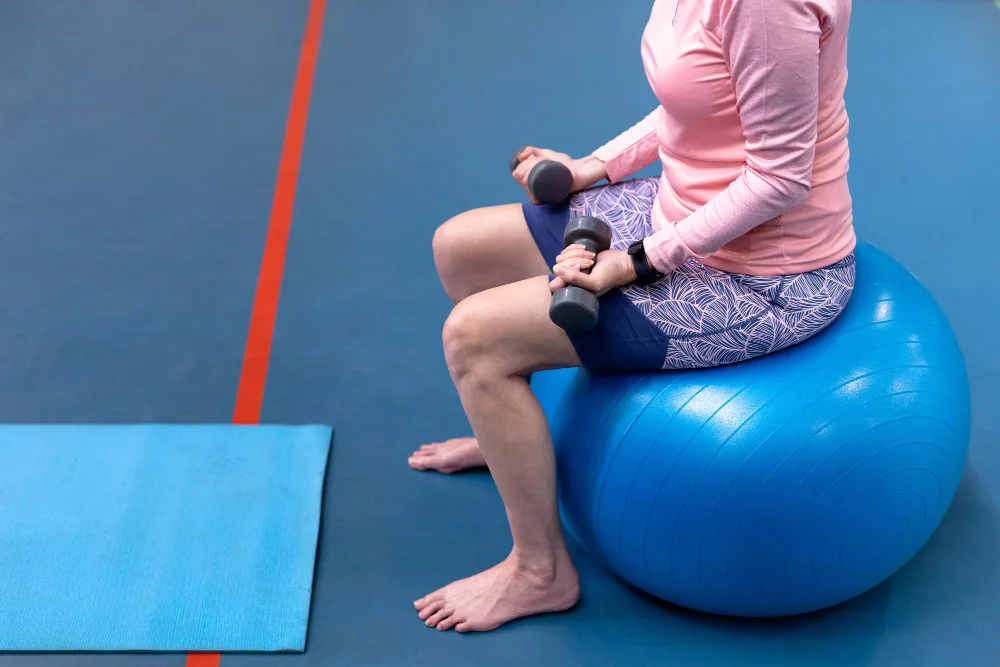
Start with resistance bands or light free weights (5 to 10 pounds). Focus on controlled movements, not load. The goal is to reintroduce muscle activation, not to push your limits. Lower body exercises, especially those involving the legs, hips, and thighs, should be reintroduced gradually and with your surgeon's sign-off.
Signs that you're not ready to add strength training yet:
- Swelling that increases after activity and doesn't settle within a few hours
- Tenderness or firmness at surgical sites
- Compression garments feel unusually tight after workouts
Listen to your body. Pushing through those signals can set your recovery back by weeks.
Does Wearing a Compression Garment Really Matter for Exercise Recovery?
Yes, and skipping it is one of the most common recovery mistakes we see. Compression garments during the early months of recovery do several things at once. They support the lymphatic vessels that were carefully preserved during surgery, they reduce the risk of fluid buildup, and they help the skin conform to its new contours.
During low-impact exercise in the first 6 weeks, wear your compression garment for every session. As you move into weeks 8 to 12 and beyond, your surgeon will guide you on when you can begin to ease off. Most patients transition to compression for exercise only around the 3-month mark, though this depends on the individual.
Physical therapy can also make a real difference here. A therapist trained in post-lipedema recovery can build a program specifically around your surgical sites, your baseline fitness, and your goals. Ask your surgical team for a referral.
How Does Consistent Activity Help Maintain Lipedema Surgery Results?
Lipedema surgery removes the abnormal fat tissue, but staying active is what helps protect those results over time. Regular low-impact exercise supports lymphatic flow, helps manage inflammation, and maintains a healthy weight, all of which matter for how long your results last.
The goal isn't to train hard. It's to move consistently. Three to five sessions per week of 20 to 30 minutes of low-impact activity is a solid long-term target for most post-surgical lipedema patients.
Patients who build this habit within the first year after surgery tend to experience better long-term outcomes than those who return to a sedentary routine.
Best Florida Spots for Low-Impact Recovery Walks
Getting outside has real benefits during recovery, including mood support, gentle cardiovascular activity, and vitamin D. Here are a few local spots that work well for short, flat recovery walks:
- Celery Fields (Sarasota): Flat, paved paths with minimal incline. Excellent in the early morning before the heat builds.
- Suncoast Trail (Tampa/Pasco County): A long, flat paved trail that lets you control your distance easily.
- Riverside areas in downtown areas throughout Central Florida: Many neighborhoods have flat riverwalk paths that are shaded and easy on the joints.
Always bring water, wear your compression garments, and keep your pace conversational, meaning you should be able to talk comfortably without getting winded.
Get Personalized Guidance on Your Recovery
Every recovery is different. What works for one patient may not be right for another, and the timeline always depends on the specifics of your surgery, your health history, and how your body responds.
If you had your lipedema surgery at Byrd Lipedema Surgery Center or you're planning a procedure and want to understand what recovery looks like, reach out to our team directly. Dr. Marcia Byrd has performed over 15,000 successful lipedema surgeries and her team can walk you through exactly what to expect. Call us at (770) 587-1711 to get started.