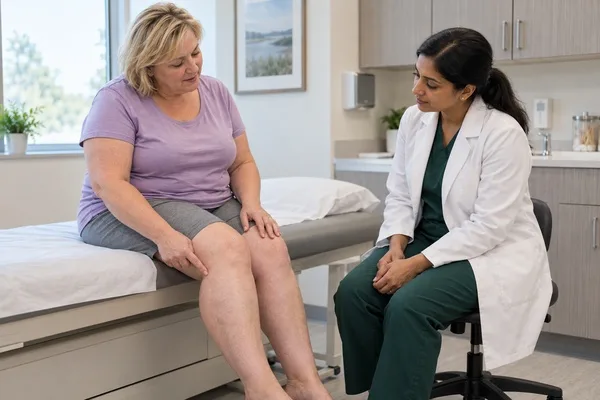
If you had lipedema liposuction elsewhere and you still have pain, swelling, or areas that feel untreated, revision may be possible. A careful evaluation can show what was left behind and whether a second procedure could bring you more relief.
Feeling disappointed after surgery is more common than many women realize, and it is not the end of the road. To ask about a second opinion, contact our team or call (770) 587-1711.
What are the signs that a prior lipedema liposuction was incomplete?
The clearest signs are pain, tenderness, or heaviness that never really improved, along with areas of lipedema fat that still look and feel the same as before surgery. Ongoing trouble walking or moving comfortably is another signal.
Pay attention to specific spots. Many patients notice leftover fat around the knees, ankles, or upper arms, or uneven contours where one area was treated more than another. Firm, lumpy, or scarred tissue under the skin can also point to a problem.
Some symptoms suggest the procedure was not lymph-sparing. Swelling that got worse after surgery, or new heaviness in the legs, may mean the lymphatic system was not protected the way lipedema surgery requires.
Give your body time to heal before judging the result. Swelling can take months to settle, so most surgeons evaluate the final outcome well after the first recovery period has passed.
What does a revision evaluation examine?
A revision evaluation looks at how you feel now, what was done before, and what tissue remains. Dr. Byrd starts by asking whether you still have pain in your lipedema areas and whether movement is still difficult. You can read more about our revision surgery approach before your visit.
From there, she examines the treated and untreated areas, checking for remaining lipedema fat, scar tissue, and uneven contours. Bring your operative report from the prior surgery if you can get it, along with photos from before and after.
We met a woman looking for a revision opinion who came with a small binder full of photos. She was a little embarrassed at how many there were and worried it was overkill, but she was having trouble pinpointing what was still wrong. We talked through the photos and her symptoms together and came up with a plan.
Those details matter. The more we know about your first surgery and how you have felt since, the clearer the path forward becomes.
What should you realistically expect from revision surgery?
The main goals are the same as with first-time lipedema surgery: less pain and better mobility. Improved shape is a welcome benefit, but it is not the primary goal, and revision cannot always deliver the exact look you hoped for.
Revision can be more complex than a first procedure. Scarred or fibrous tissue is harder to treat, so Dr. Byrd uses a variety of liposuction techniques suited to stubborn, scarred fat.
Honest expectations are part of good care. Dr. Byrd is open and frank about what revision can and cannot do, so you can decide with clear eyes. No treatment fully cures lipedema, but meaningful relief is often still possible.
Looking at real results can help you set those expectations. Our gallery shows before-and-after photos of lipedema patients. Look for cases with a body type and stage similar to yours, and bring questions about them to your consultation.
Why does a specialized center handle revisions differently?
A center focused on lipedema treats it as a medical condition, not a cosmetic one. That means lymph-sparing techniques, careful staging, and an evaluation built around your symptoms instead of only your appearance.
Experience matters most in revision cases, where every patient arrives with a different history. A surgeon who has performed thousands of lipedema procedures has seen many of the patterns that lead to disappointing first results. That experience helps her tell whether remaining tissue can be safely treated and how to stage the work.
Follow-up is part of the approach too. Dr. Byrd's own patients return about a year after their surgeries, and if she sees a chance for a better outcome, she will recommend revision.
You deserve a second look. Call Byrd Lipedema Surgery Center at (770) 587-1711, or request a second-opinion consultation to talk about what revision could mean for you.