You are dealing with painful, swollen legs and wondering why your symptoms persist after surgery. Many post-surgical patients in Central Florida struggle to tell the difference between Lipedema and lymphedema. An accurate diagnosis dictates your entire recovery plan and prevents years of unnecessary pain. If you need help sorting out your symptoms right away, contact Byrd Lipedema Surgery Center at (770) 587-1711.
What Is Pathological Lipedema?
Pathological Lipedema is a chronic disorder causing abnormal, painful fat buildup primarily in the legs and buttocks. Unlike regular weight gain, this diseased fat completely resists diet and exercise. We see that nearly 11% of adult women suffer from some form of this condition. This makes early detection critical for long-term health.
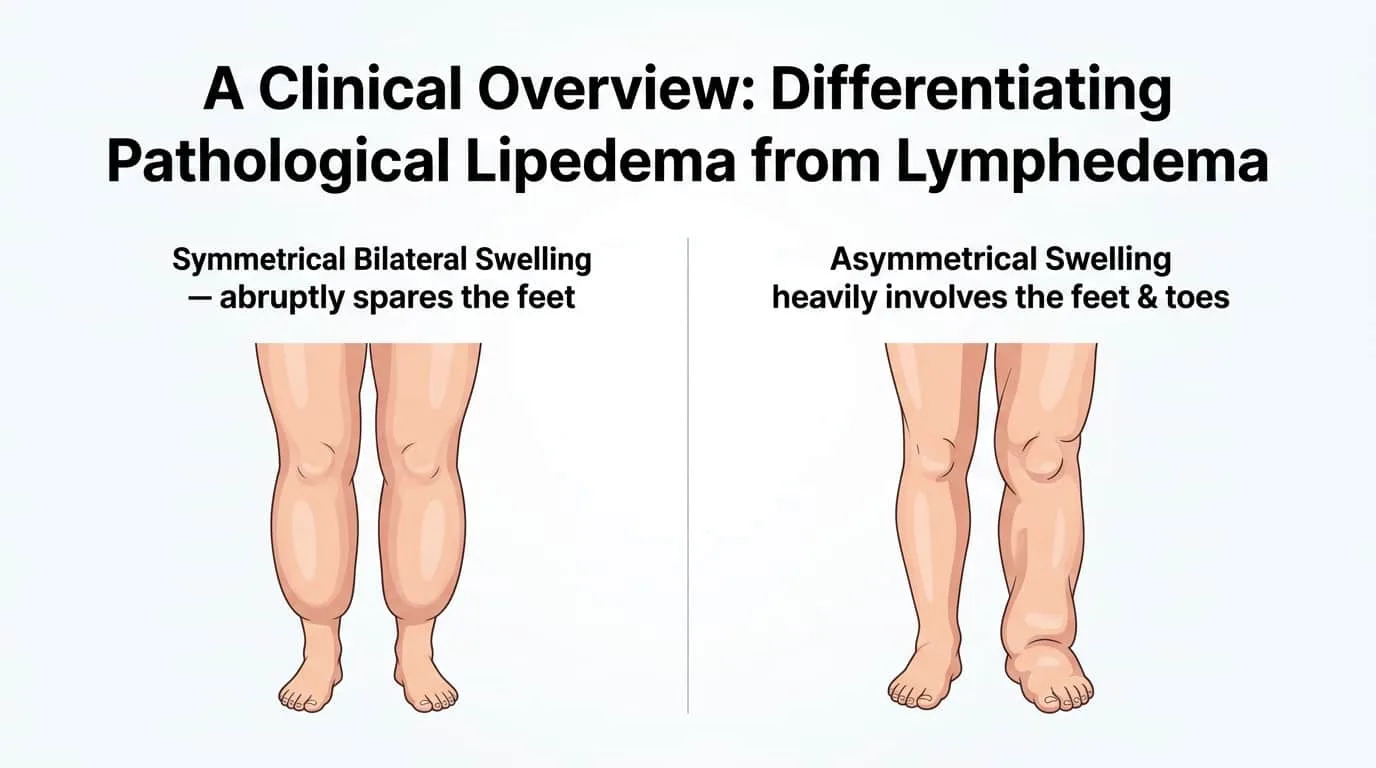
The clinical presentation of Lipedema is very distinct. Patients typically notice a heavy, symmetrical fat distribution that stops abruptly at the ankles. This creates a cuff-like appearance. The affected areas are extremely tender to the touch and bruise easily. As the condition progresses over 5 to 10 years, the heavy fat nodules restrict mobility. This physical burden heavily impacts your overall quality of life and mental well-being.
What Are the Signs of Lymphedema?
Lymphedema is localized fluid retention and tissue swelling caused by a compromised lymphatic system. Primary lymphedema is genetic. Secondary lymphedema often follows cancer treatments, trauma, or previous surgeries. You will typically notice asymmetrical swelling that affects just one limb.
The classic sign of lymphedema is pitting edema. When you press a finger into the swollen skin, the indentation remains for several minutes. Patients also experience severe skin changes, including thickening and hardening of the tissue. If left untreated, the stagnant lymphatic fluid dramatically increases your risk of developing serious bacterial infections like cellulitis.
How Do We Differentiate Fat from Fluid?
We differentiate these conditions through a combination of physical palpation, pain response testing, and advanced imaging. A specialized Lipedema treatment center knows exactly what physical markers to look for. Lipedema fat feels like small, painful marbles under the skin. Lymphedema fluid feels firm and painless.
Clinical assessment always includes checking the Stemmer sign. If we cannot pinch and lift the skin on the top of your toes, you likely have lymphedema. Diagnostic tools provide the final confirmation. Lymphoscintigraphy tracks fluid movement through your lymphatic system. High-resolution ultrasound and MRI scans help us clearly distinguish between thick Lipedema fat deposits and pooling lymphatic fluid.
The Diagnostic Journey for Post-Surgical Patients
Your diagnostic journey starts with a thorough medical history and a detailed physical examination. Post-surgical patients often present with overlapping symptoms. You might have Lipedema fat that eventually damages the lymphatics, creating a secondary lymphedema known as lipo-lymphedema.
In our over 30 years of surgical experience, we have learned that overlapping symptoms confuse many doctors. You need a dedicated Lipedema treatment center to sort out the root. cause. Dermatologists, vascular surgeons, and lymphologists all play a role in ruling out venous insufficiency or skin conditions. Our specialized diagnostic approach ensures you do not waste months pursuing the wrong therapies. Consultations in our office run exactly $200, which includes a full clinical evaluation of your swelling patterns.
Treatment Approaches and Management
Conservative management for Lipedema focuses on reducing inflammation. You will wear specialized flat-knit compression garments that cost between $100 and $250 each. A strict anti-inflammatory diet and water-based exercises also help manage daily pain. Lymphedema requires Complete Decongestive Therapy (CDT). This involves manual lymphatic drainage massages 2 to 3 times a week, followed by rigid bandaging and meticulous skin care.
When conservative measures fail, surgical intervention becomes medically necessary. At Byrd Lipedema Surgery Center, we utilize advanced, lymph-sparing techniques. We safely remove diseased tissue using water-jet assisted liposuction. The gentle water spray detaches fat cells without traumatizing the surrounding lymphatic vessels. For thicker, fibrotic fat, we employ power assisted liposuction. The vibrating cannula breaks up dense fat quickly, reducing your time under local anesthesia and speeding up your recovery. Every patient receives a highly personalized surgical plan based on their specific stage and symptoms.
Living with Swelling in Central Florida
Florida weather is hard on swollen limbs. Orlando's intense 90-degree summers and 80% humidity cause blood vessels to dilate, making both Lipedema and lymphedema symptoms worse. You have to actively manage your environment to stay comfortable.
We frequently talk to patients living in newer communities like Lake Nona or historic neighborhoods like Winter Park. They struggle to stay active during the hottest months. A good Lipedema treatment center will tell you to take advantage of local indoor pools and community aquatic centers. Swimming applies gentle, natural compression to your legs while keeping your core temperature down. Limit your outdoor walks to early mornings before 8:00 AM. Maintaining a healthy lifestyle in Florida requires planning, but staying active prevents your symptoms from advancing.
The Bottom Line on Diagnostic Accuracy
Accurate diagnosis is the only way to achieve lasting pain relief and mobility. Treating Lipedema fat with fluid-draining techniques will not work. Removing healthy fat from a lymphedema patient can make the swelling worse. You need clinical precision to guide your recovery.
Do not let misdiagnosis delay your healing. Reach out to a qualified Lipedema treatment center to get the specific answers you deserve. Contact Byrd Lipedema Surgery Center at (770) 587-1711 to schedule your comprehensive evaluation today.