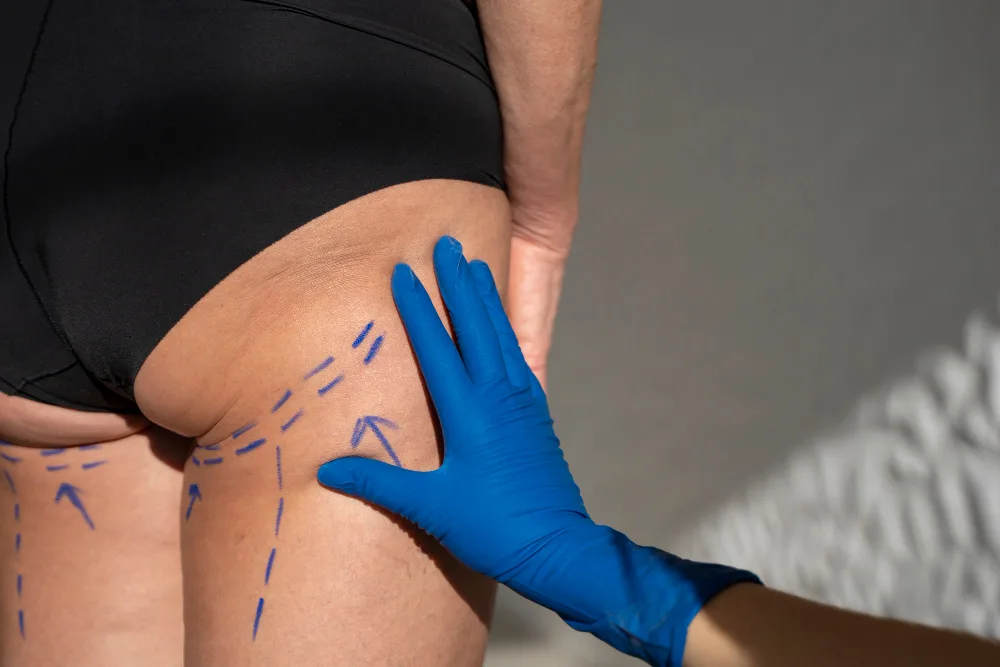
Many women across Florida live with lipedema for years without a proper diagnosis. The pain, heaviness, and swelling in your legs and arms aren't from lack of effort. It's a recognized medical condition, and it's not your fault. If you're searching for answers about lipedema stages and whether lipedema liposuction might help, this guide walks you through everything you need to know.
Ready to talk to a specialist? Contact Byrd Lipedema Surgery Center at (770) 587-1711 to schedule a consultation.
What Is Lipedema and Why Does It Affect So Many Women?
Lipedema is a chronic condition where abnormal fat accumulates symmetrically in the legs, hips, buttocks, and sometimes the arms. It affects women almost exclusively and is frequently misdiagnosed as obesity or lymphedema. The fat doesn't respond to diet or exercise the way normal fat does. That's what makes it so frustrating and why so many women spend years trying to "fix" something that can't be fixed through willpower alone.
Across Florida, from the beach communities along the Gulf Coast to neighborhoods like Lake Nona and Coral Springs, women are getting diagnosed later than they should. Early awareness of the stages makes a real difference in treatment outcomes.
What Are the 4 Stages of Lipedema?
Lipedema progresses through four distinct stages. Each stage describes how much the fat tissue has changed and how significantly daily life is affected.
Stage 1: Smooth Skin, But Fat Is Already Different
At Stage 1, the skin surface still looks relatively normal. The fat underneath, though, is already enlarged and nodular. You might notice your legs look disproportionate compared to your upper body, even if your weight is in a healthy range. Mild tenderness when pressed and easy bruising are common early signs.
This stage is the best time to start conservative management. Catching lipedema here can slow progression significantly.
Stage 2: Skin Becomes Uneven
By Stage 2, the skin surface starts to change. You'll see an uneven, mattress-like texture or a walnut-shaped pattern beneath the skin. The fat deposits become firmer and more prominent. Pain increases, and compression garments become a daily necessity for many women.
Swelling that worsens throughout the day, especially after standing or walking for extended periods, is a hallmark sign at this stage.
Stage 3: Large Hanging Fat Deposits
Stage 3 is where lipedema significantly limits mobility. Large lobes or folds of fat form, particularly around the inner thighs and knees. Clothing becomes difficult to fit. Many women at this stage experience joint pain because the weight of the fat deposits changes how stress is distributed across the knees and hips.
Women dealing with Stage 3 lipedema often tell us they've been dismissed by doctors for years before reaching this point. It shouldn't take that long to get help.
Stage 4: Lymphedema Develops Alongside Lipedema
Stage 4 involves the development of lymphedema on top of lipedema, a combination called lipo-lymphedema. The lymphatic system becomes compromised, causing additional fluid buildup, skin changes, and a much heavier, more painful limb. Mobility is severely restricted. This stage requires specialized care and typically more involved surgical treatment.
What Non-Surgical Options Help Manage Lipedema?
Non-surgical management helps control symptoms and slow progression, but it doesn't remove lipedema fat. Options include:
- Compression therapy: Medical-grade compression garments worn daily reduce swelling and discomfort
- Manual lymphatic drainage (MLD): A specialized massage technique that moves lymph fluid and reduces heaviness
- Low-impact exercise: Swimming and cycling help without putting excessive stress on affected joints
- Anti-inflammatory diet: Reducing processed foods and added sugars can minimize inflammation and slow fat accumulation
These therapies work best in Stages 1 and 2. By Stage 3 or 4, conservative care alone isn't enough to restore quality of life for most patients.
When Is Lipedema Liposuction Medically Necessary?
Lipedema liposuction becomes the recommended path when conservative therapies no longer control pain, mobility is significantly limited, or the condition has progressed to Stage 3 or 4. At that point, surgery isn't cosmetic. It's a medical necessity.
Specifically, you should consider speaking with a lipedema surgeon if:
- You've been consistent with compression and MLD for 6 or more months without adequate relief
- Pain interferes with daily activities like walking, working, or sleeping
- You're at Stage 2 with rapidly progressing symptoms, Stage 3, or Stage 4
- Joint damage is developing from the weight and positioning of fat deposits
- Your mental health is significantly impacted by the condition
Lipedema liposuction targets and removes diseased fat tissue while preserving the lymphatic vessels. This is a specialized procedure, not standard cosmetic liposuction, and it requires a surgeon trained specifically in lipedema treatment.
What Are WAL and PAL, and How Do They Differ?
Two primary techniques are used for lipedema liposuction: Water-Jet Assisted Liposuction (WAL) and Power-Assisted Liposuction (PAL). Both are lymph-sparing approaches, meaning they protect the lymphatic system during fat removal.
Water-Jet Assisted Liposuction (WAL) uses a fan-shaped stream of fluid to gently loosen fat cells from the surrounding tissue before they're removed. Because the fat is detached softly rather than forcefully, there's minimal trauma to nerves, blood vessels, and lymphatics. Most WAL procedures are performed under local anesthesia, which puts less stress on the body and supports faster recovery. Many patients experience only a few weeks of required compression garment use in early-stage cases, though more advanced cases require longer-term compression.
Power-Assisted Liposuction (PAL) uses a mechanical cannula with a vibrating tip to break up fat cells efficiently. That vibrating tip does the work, so the cannula moves through tissue more gently than traditional manual liposuction. PAL results in less bruising, more precision, and faster healing compared to conventional techniques. Hospitals and surgery centers typically set a removal limit around 5,000 mL per session, and a skilled lipedema surgeon manages fluid use carefully to maximize the fat removed safely.
Dr. Marcia V. Byrd at Byrd Lipedema Surgery Center combines both WAL and PAL techniques, along with tumescent anesthesia, in a custom approach developed over more than 30 years of surgical experience. She has performed over 15,000 successful surgeries and trained directly with Dr. Josef Stutz of Germany, a world-renowned authority on lipedema liposuction.
How Do You Find Qualified Lipedema Specialists in Florida?
Finding the right specialist matters more with lipedema than with almost any other condition. A general plastic surgeon isn't the same as a surgeon trained specifically in lipedema liposuction techniques.
When evaluating a specialist, ask:
- Do they perform lymph-sparing liposuction techniques like WAL and PAL?
- How many lipedema surgeries have they completed?
- Can they help you work with your insurance company on coverage?
- Do they treat the full range of lipedema stages?
Many Florida patients travel to Roswell, Georgia, just north of Atlanta, to receive care at Byrd Lipedema Surgery Center. The practice serves patients from across the US and Canada, including many from South Florida communities like Coral Springs, Boca Raton, and the greater Miami area, as well as patients from Central Florida cities near Lake Nona. Consultations are $200, with a $50 non-refundable deposit required to book.
What Does Recovery Look Like After Lipedema Liposuction?
Most patients experience bruising, swelling, and soreness for 2 to 6 weeks following surgery. Compression garments are required during recovery. Early-stage patients often need them for just a few weeks, while more advanced cases require longer use.
The long-term results are well-documented. Research shows lymph-sparing liposuction produces good long-term reductions in lipedema pain and stops disease progression in most patients. Many women report going down multiple clothing sizes, regaining mobility they'd lost years earlier, and experiencing a dramatic improvement in daily quality of life.
Recovery timelines vary based on how many areas were treated and the patient's overall health. Most WAL procedures are outpatient, though some patients with more extensive surgery may stay overnight for observation.
Take the Next Step Toward Real Relief
If you've spent years being told the swelling and pain in your legs is just "extra weight," you deserve a real answer. Lipedema is a medical condition with effective surgical solutions, and the right specialist can help you understand exactly where you are in the disease progression and what options make sense for you.
Contact Byrd Lipedema Surgery Center at (770) 587-1711 to schedule your consultation with Dr. Marcia Byrd. She has more than 30 years of experience and over 15,000 surgeries behind her, and her entire practice is dedicated to treating lipedema patients. You don't have to keep managing symptoms. Surgical options exist, and relief is possible.