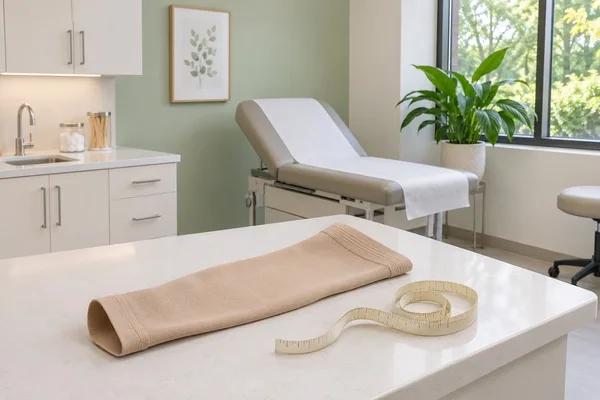
If you're planning a lipedema arm surgery, you'll want to ask how treatment will be tailored to your symptoms and lifestyle. The best questions cover how your arms are assessed, which technique is used, how arms fit with leg surgery, and what recovery means for everyday tasks. Asking them before you choose a lipectomy surgery center helps you plan with confidence.
At Byrd Lipedema Surgery Center, we welcome these questions at every consultation. Reach out to our office or call (770) 587-1711 to start the conversation.
How Will the Surgeon Assess Your Arms in Person?
Ask what the surgeon will look for during the exam and how those findings shape the plan. A good assessment goes beyond measuring the arms.
Your surgeon should examine where the tissue sits, from the upper arm to the forearm, and how it feels. Skin texture and firmness matter, and so does how much the skin may change after fat is removed. Expect questions about pain, bruising, heaviness, and how your arms feel by the end of the day.
Lifestyle belongs in this conversation too. Tell the surgeon what your arms need to do every day, whether that is lifting a toddler, typing for hours, or working with your hands. Those details help shape a plan that fits your life, not just your measurements.
Good questions to bring: Which areas of my arms would you treat? What do you expect my skin to do afterward? How do my symptoms affect your recommendation? Clear, specific answers are a good sign that the plan is being built around you.
Why Do Technique and Lymph-Sparing Care Matter in the Arms?
The technique affects how gently the tissue is treated, and protecting lymphatic vessels is a priority with lipedema. Ask exactly which method the surgeon uses and why.
Our center uses water-jet assisted liposuction, or WAL. It is a gentler type of liposuction with a reputation for being less damaging to lymphatics than traditional liposuction. WAL is often combined with power-assisted liposuction, or PAL, which uses the tumescent technique.
Ask any surgeon how they protect the lymphatic system during arm surgery, and what they do differently in the arms compared with the legs. Ask how many lipedema surgeries they have performed. Dr. Marcia Byrd has performed thousands of lipedema surgeries in her 30-year career.
Learn more about our approach to lipedema treatment, including how WAL and PAL work together. Then bring your technique questions to the consultation, where the surgeon can answer them for your arms specifically.
How Does Arm Surgery Fit Into a Staged Plan With the Legs?
Lipedema often affects more than one area, so treatment usually happens in stages. Ask how your arms fit into that sequence and what comes first.
Several separate operations may be needed to treat the different parts of the body. For many women, that means planning the arms alongside one or more procedures on the legs. The order depends on your symptoms, your goals, and what makes sense for recovery.
Ask which area the surgeon recommends treating first and why. Ask how much time is usually planned between procedures, and what needs to happen before the next stage begins. If your legs bother you more than your arms, or the other way around, say so.
Staging also affects your calendar. Planning ahead lets you line up time off work, help at home, and any travel for each procedure. One of the patients in our gallery returned to complete treatment on the back of her thighs, which shows how a plan can unfold over more than one visit.
What Do Recovery and Compression Mean for Daily Tasks?
Ask how recovery will affect lifting, dressing, and the other things your arms do every day. Arms are hard to rest, so plan for them ahead of time.
Compression is part of recovery for many liposuction patients. Ask what type of garment you will wear on your arms, how long you will wear it, and how to get it on and off. Tops that open in the front can make dressing easier in the first days.
Lifting is the next question. Ask when you can lift children, groceries, or laundry, and when you can drive or return to work. If you live alone, ask what help you may need at home and for how long.
Bring a list of your daily tasks to the consultation. Your surgeon can walk through which ones may need help and which you can manage on your own. That way, recovery fits around your real routine instead of surprising you.
Why Should You Review Real Before-and-After Results?
Real photos help set expectations. They show what results looked like for other patients, which helps you ask better questions about your own.
Our before and after gallery includes a section of arm cases, all actual patients treated at our center by Dr. Byrd. Look for patients whose starting point resembles yours, and pay attention to skin as well as shape. Skin laxity is common as we age, after weight loss, and after fat removal surgery.
Every body heals differently, so photos are a guide, not a promise. Ask the surgeon how your arms compare with the cases you see, and which results are realistic for your skin, your stage, and your goals. An honest answer to that question is worth more than any single photo.
When you are ready, view the gallery, then call (770) 587-1711 or contact us to schedule your consultation.