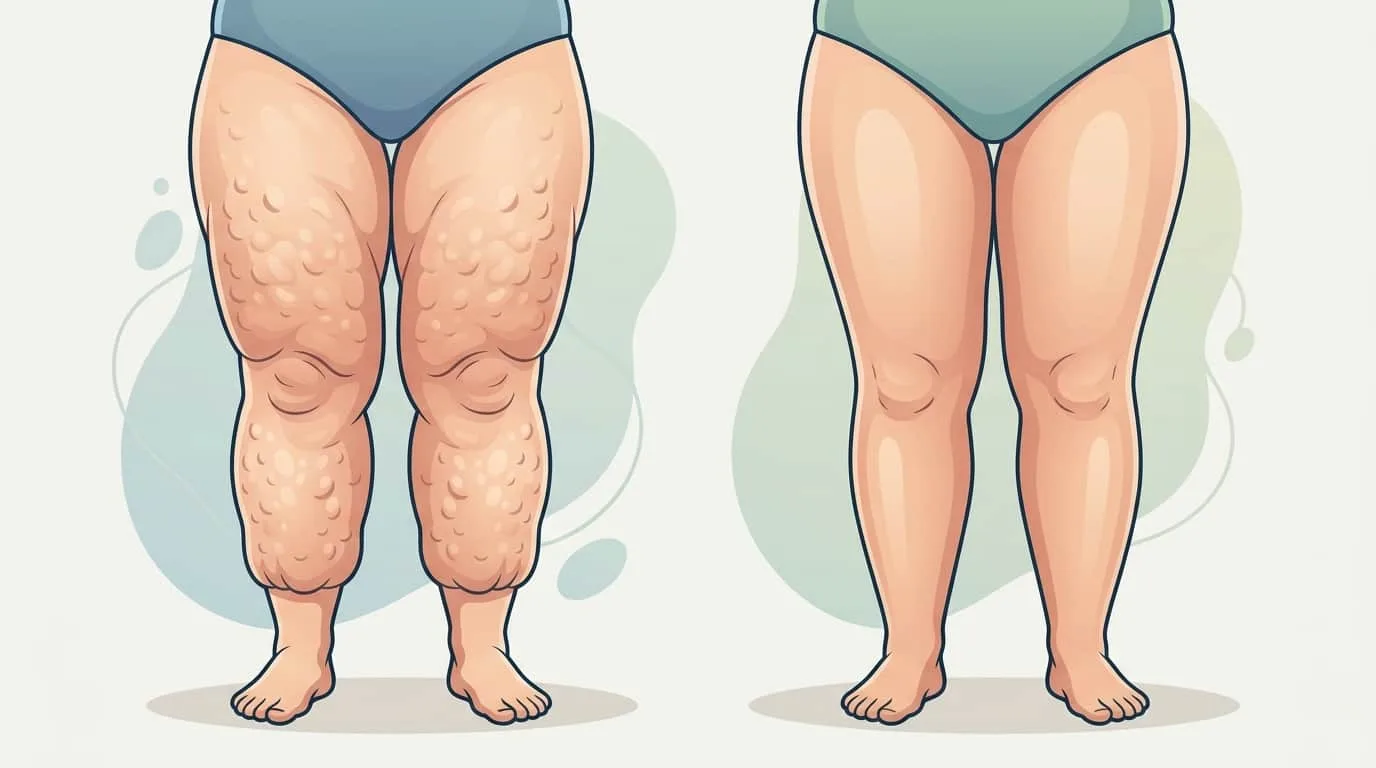
Wondering if you have Lipedema or just fat legs? Lipedema is a medical condition causing painful, symmetrical fat buildup in the legs and arms that resists diet and exercise. Unlike typical weight gain, Lipedema fat feels nodular and bruises easily. Proper diagnosis by a specialist is critical for effective treatment.
Women visit doctors for years complaining about heavy, painful legs. Most hear the same dismissal from their primary care providers. They tell patients to eat less and exercise more. If you struggle with this condition, you know the frustration firsthand. Schedule your $200 consultation with Byrd Lipedema Surgery Center at (770) 587-1711 to get the accurate diagnosis you deserve.
To understand the difference between Lipedema or just fat legs, we need to look at the science. Lipedema is a progressive fat disorder affecting up to 11% of women. It causes an abnormal accumulation of fat cells, primarily in the lower body. This fat buildup leads to severe pain, swelling, and decreased mobility over time.
Why Do Doctors Mistake Lipedema for Regular Weight Gain?
Many doctors mistake Lipedema for regular weight gain because medical schools rarely teach the specifics of this disease. Providers see a patient with a larger lower body and immediately assume standard obesity. This lack of education leaves millions of women misdiagnosed and blaming themselves for a condition they cannot control with diet.
I see the psychological toll of this misdiagnosis every week. A recent patient named Sarah drove four hours to our clinic near historic Canton Street in Roswell, GA. For 15 years, doctors dismissed her pain. She tried extreme diets and worked out five days a week, but her legs only grew larger and more painful.
During her initial assessment at Byrd Lipedema Surgery Center, Dr. Marcia Byrd used specialized lymphatic assessment protocols to examine her tissue. We found classic nodular fat patterns and a negative Stemmer's sign. When Dr. Byrd finally gave Sarah her official Lipedema diagnosis, she broke down in tears of relief. She finally knew it was not her fault.
What Are the Key Symptoms of Lipedema?
The key symptoms of Lipedema include bilateral, symmetrical fat accumulation in the legs, hips, and buttocks. The affected tissue feels exceptionally tender to the touch and bruises easily. Patients often notice their upper body remains significantly smaller than their lower body, creating a disproportionate shape.
Other critical indicators include:
- Nodule formation under the skin that feels like small frozen peas or rice.
- Extreme pain when pets or children press against the legs.
- Swelling that worsens throughout the day but rarely affects the feet.
- Zero fat loss in the legs despite strict caloric deficits and rigorous exercise routines.
If you constantly ask yourself if you have Lipedema or just fat legs, pay close attention to the pain factor. Standard adipose tissue does not hurt when you press on it. Lipedema tissue does.
How Does Lipedema Differ from Lymphedema and Obesity?
Lipedema differs from obesity because the fat distribution is disproportionate and ignores caloric restriction. It differs from lymphedema because it affects both legs equally and does not typically cause swelling in the hands or feet. Lymphedema often involves asymmetrical swelling and pitting edema, which leaves an indentation when you press the skin.
We regularly evaluate patients at our clinic on Crabapple Road who have overlapping conditions. Sometimes, advanced Lipedema can damage the lymphatic system, leading to secondary lymphedema. This complex interaction makes seeking a highly trained specialist absolutely vital for your health.
What Happens During a Lipedema Diagnostic Assessment?
During a Lipedema assessment, a specialist will conduct a thorough clinical physical examination and review your complete medical history. We look for specific fat distribution patterns, check for tissue tenderness, and evaluate your lymphatic function. In some cases, we use ultrasound to rule out venous insufficiency or other vascular issues.
You will spend about an hour with our team discussing your symptoms. We ask about family history, as Lipedema often carries a strong genetic component. We also evaluate the specific stage of your condition, ranging from Stage 1 to Stage 4.
What Are the Best Surgical Treatments for Lipedema?
The best surgical treatments for Lipedema involve specialized, lymph-sparing liposuction techniques. These procedures safely remove diseased fat while protecting the delicate lymphatic channels. Depending on your specific tissue density and stage, your surgeon will recommend a targeted approach to relieve pain and restore mobility.
Our center specializes in three distinct surgical techniques:
- Power-assisted liposuction: This uses a mechanical cannula with small vibrations at the tip. It breaks up fat cells efficiently without injuring nerves or blood vessels.
- Water-jet assisted liposuction: This method uses a flat, fan-shaped water jet to gently detach fat from the tissue structure. It provides rapid healing and requires only local anesthesia.
- Ultrasonic-assisted liposuction: This technique uses ultrasound waves to liquefy fibrous fat cells before removal. It works incredibly well for dense fat deposits.
During a single session, we safely remove up to 5000 mL of Lipedema fat and fluid. Recovery takes a few weeks, and patients typically wear compression garments to support the healing tissue.
Need Help With Your Lipedema Diagnosis?
Do not spend another year fighting a losing battle against your body. If you suspect you have Lipedema, you need a clinical expert who listens to your symptoms and understands this complex disease. Our clinic in Roswell serves patients from all over the United States and Canada, providing a true beacon of hope for women seeking lasting relief.
Take the first step toward living a pain-free life. Contact Byrd Lipedema Surgery Center at (770) 587-1711 to schedule your comprehensive consultation today.