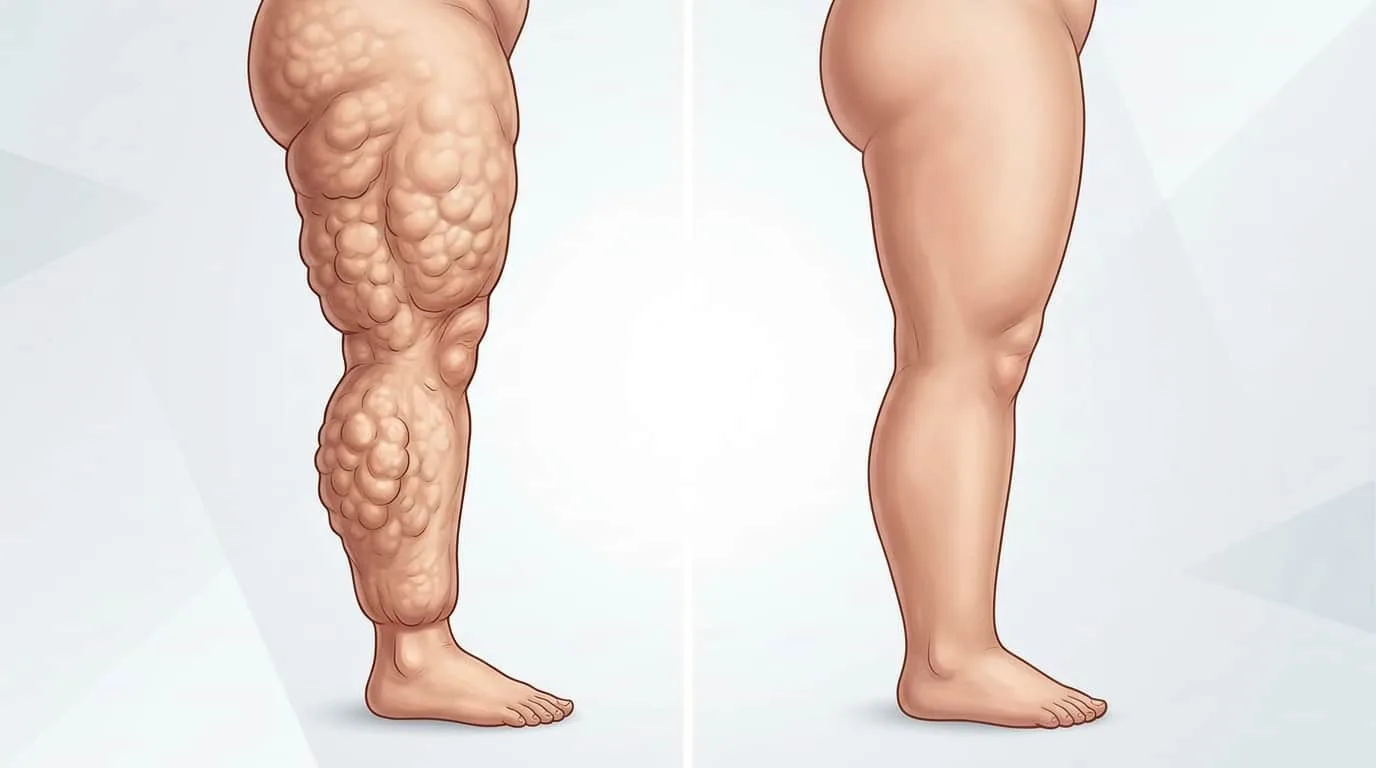
Lipedema fat is a chronic, progressive tissue disorder that feels nodular, causes pain, and resists diet and exercise. Regular fat is typically soft, painless, and responsive to caloric deficits. Diagnosing Lipedema early prevents severe mobility loss and ensures patients receive specialized, lymph-sparing surgical interventions.
For years, doctors may have told you to just eat less and move more. You follow every rule, track every calorie, yet your legs remain heavy, swollen, and exquisitely tender to the touch. This pervasive misunderstanding of body fat leaves millions of women trapped in an exhausting cycle of medical gaslighting and hidden suffering. If you are tired of fighting a body you do not understand, please contact Byrd Lipedema Surgery Center at (770) 587-1711 to schedule a specialized consultation. Lipedema is a recognized chronic disease of the adipose tissue, not a personal failing or a simple case of obesity. This guide will explore the critical distinctions between Lipedema fat vs. regular fat, highlighting the diagnostic truths you need to advocate for your health.
Consider the story of Sarah, a patient who spent 15 years enduring the brutal summer heat near Lake Eola in Orlando, always hiding her legs under heavy clothing. Doctors repeatedly diagnosed her with standard obesity. Desperate for a true answer, she traveled from Central Florida up to Roswell, GA. Taking a short drive past historic Canton Street, she arrived at Byrd Lipedema Surgery Center. Here, Dr. Marcia Byrd utilized specialized lymphatic assessment protocols—including a targeted physical exam of the nodular tissue and an evaluation of the “cuff sign” at her ankles. For the first time, Sarah felt heard. She finally received a correct diagnosis of Stage 2 Lipedema, and the clinic became her beacon of hope.
How Does Regular Adipose Tissue Function in the Body?
Regular fat stores energy, provides insulation, and produces essential hormones. When you consume more calories than you burn, standard adipose tissue expands symmetrically across your entire body. This tissue generally feels soft and smooth to the touch. Most crucially, regular fat responds directly to diet and exercise. If you maintain a consistent caloric deficit, this fat will shrink over time. Understanding how normal fat behaves matters because it helps us immediately identify when tissue stops acting normally, signaling an underlying medical condition rather than a lifestyle issue.
What Makes Lipedema Fat Distinct from Regular Fat?
Lipedema is a chronic, progressive disorder of the adipose tissue driven by genetics, inflammation, and lymphatic dysfunction. Unlike normal fat, Lipedema fat vs. regular fat presents a stark contrast in texture, distribution, and physical sensation. Identifying these unique traits is the first step toward getting the right treatment.
Where Does Lipedema Fat Typically Accumulate?
Lipedema tissue symmetrically enlarges the legs, thighs, hips, and sometimes the arms. It distinctly spares the hands and feet, creating a pronounced “cuff sign” where the swelling abruptly stops at the ankles or wrists. Patients frequently experience severe body disproportion, perhaps wearing a size 6 on top and a size 16 on the bottom.
How Does Lipedema Tissue Feel?
Lipedema fat feels nodular, firm, and heavily fibrous. Many patients describe the texture beneath their skin as feeling like frozen peas, small beads, or grains of rice.
Does Lipedema Fat Cause Physical Pain?
Yes, Lipedema tissue is spontaneously painful and highly tender to the touch. Even the light pressure of a pet sitting on your lap can cause agonizing pain and severe bruising. Additionally, patients often experience orthostatic edema, where fluid builds up upon standing. This differs significantly from general lymphatic swelling and requires an entirely different management strategy.
How Does Lipedema Progress Over Time?
Lipedema typically advances through four clinical stages, transitioning from smooth skin with hidden nodules to massive, overhanging folds of fibrotic fat. This progression severely impacts your daily quality of life. The increasing weight and structural changes cause mobility issues, degenerative joint stress, and profound psychological distress. Social isolation becomes common as patients try to hide their changing bodies. Because an estimated 85% of cases are initially misdiagnosed as standard obesity or lymphedema, patients endure years of ineffective, demoralizing treatments that do nothing to halt the disease.
How Do Doctors Differentiate Lipedema Fat from Regular Fat?
Proper differentiation relies heavily on specialized physical examinations and detailed patient histories. A trained specialist must physically palpate the tissue to check for nodularity and tenderness. You cannot diagnose Lipedema simply by looking at a number on a scale.
What Questions Reveal a True Lipedema Diagnosis?
Clinicians ask targeted questions about symptom onset—usually around puberty, pregnancy, or menopause. They will also ask about the presence of easy bruising and any family history of the disease.
What Role Does Imaging Play in Diagnosis?
Doctors use ultrasound, MRI, or DXA scans to confirm the diagnosis and rule out alternative conditions. These imaging tools help specialists differentiate Lipedema from pure obesity, venous insufficiency, or primary lymphedema. Ruling out these conditions ensures the patient receives the exact surgical or conservative care they require.
How Does the Local Climate Affect Lipedema Symptoms?
The oppressive heat and high humidity of the Southeast can dramatically exacerbate Lipedema swelling and pain. Whether you are walking through an amusement park in Orlando or running errands near the Chattahoochee River Nature Center in Roswell, the heat causes blood vessels to dilate, pushing more fluid into the surrounding diseased tissues. Finding knowledgeable specialists who understand these regional challenges is vital. Local support networks and dedicated clinics in the Atlanta area offer specialized, compassionate care that general practitioners simply cannot provide.
What Are the Most Effective Treatment Approaches for Lipedema?
Conservative methods like extreme dieting and rigorous exercise fail to reduce Lipedema fat. Starving yourself will only deplete your healthy fat and muscle, leaving the diseased Lipedema tissue completely intact. This is why medical differentiation is so critical to your overall health plan.
What Conservative Therapies Help Manage Symptoms?
Patients often begin with compression therapy and Manual Lymphatic Drainage (MLD). While these treatments do not cure the disease, they help manage daily pain, reduce inflammation, and minimize fluid buildup in the lower extremities.
Which Surgical Options Actually Remove Lipedema Fat?
Lymph-sparing liposuction is the only way to physically remove diseased Lipedema tissue. Byrd Lipedema Surgery Center specializes in several advanced, tissue-sparing techniques. Dr. Byrd utilizes power-assisted liposuction to gently break up dense fibrotic tissue with precise micro-vibrations. She also performs water-jet assisted liposuction to detach fat cells using a gentle, fan-shaped water stream, significantly minimizing trauma to the fragile lymphatics. For particularly stubborn fibrotic tissue, ultrasonic-assisted liposuction safely liquefies the fat cells before extraction. A comprehensive approach also includes psychological support and ongoing pain management to heal both the body and the mind.
Why You Must Seek an Expert Medical Evaluation Today
The diagnostic truths distinguishing Lipedema fat vs. regular fat are undeniable: Lipedema is a painful, nodular disease that is completely unresponsive to standard weight-loss efforts. Proper diagnosis unlocks the door to specialized, life-changing care. Do not spend another year blaming yourself for a condition you cannot control through willpower alone. You deserve validation, empowerment, and precise surgical intervention. Please contact Byrd Lipedema Surgery Center at (770) 587-1711 to start your healing journey.