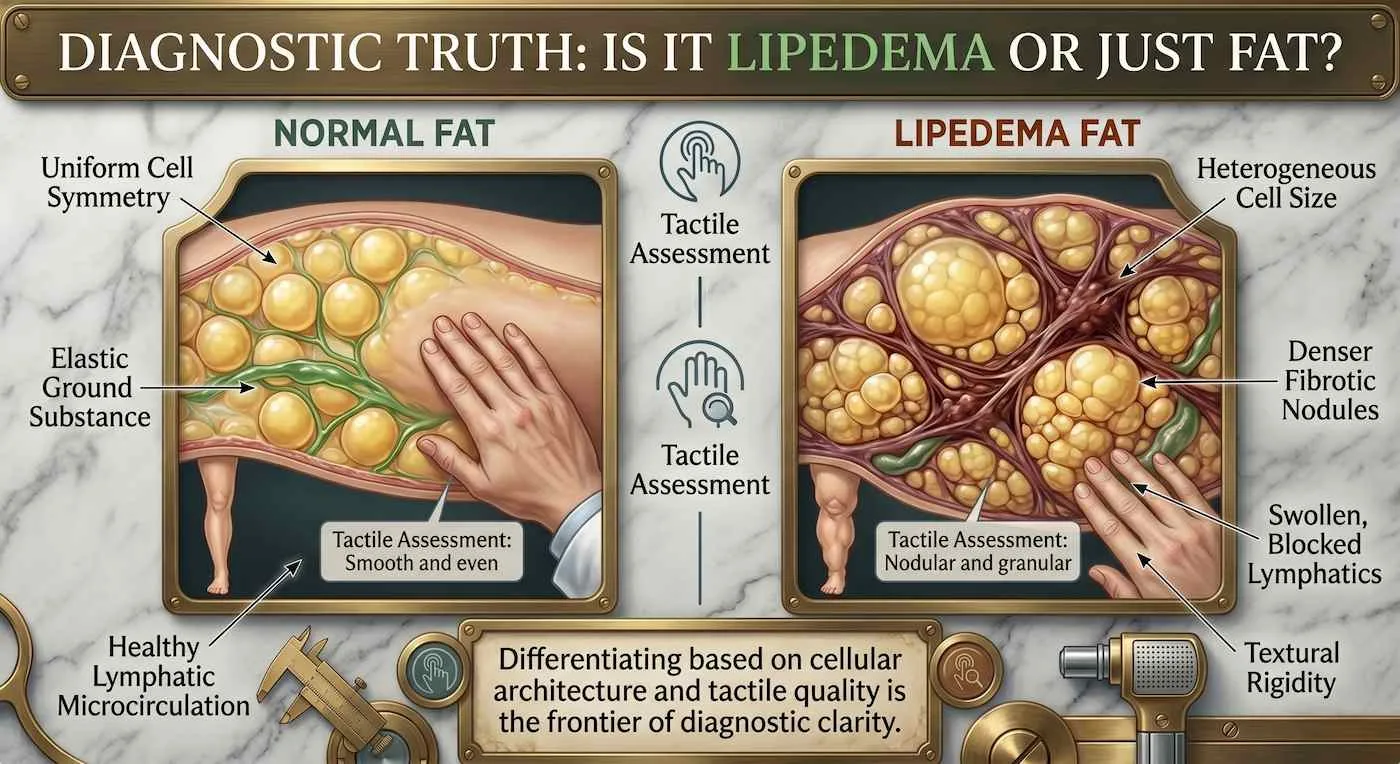
Lipedema is a chronic adipose tissue disorder causing painful, disproportionate fat accumulation in the legs and arms. General fat responds to diet and exercise, while Lipedema fat is highly resistant, tender to the touch, and often accompanied by easy bruising and swelling.
Years of doctors telling you to simply “eat less and exercise more" take a massive physical and emotional toll. Here in Roswell, GA, we meet women every week who feel completely defeated by weight that refuses to budge. If you are struggling for answers, contact Byrd Lipedema Surgery Center at (770) 587-1711 to schedule a consultation. We understand the distinct differences between Lipedema and general fat, and we are here to help you find an accurate diagnosis and effective treatment plan.
What Causes Normal Weight Gain?
Normal weight gain happens when your caloric intake exceeds what your body burns, causing adipocytes (fat cells) to expand. This general fat distributes relatively evenly across your entire body, including your torso, face, and abdomen. Unlike Lipedema, standard fat responds predictably to caloric deficits and regular exercise within 30 to 60 days.
General fat rarely causes physical pain when you press on it. Standard lifestyle modifications usually produce measurable results over time. If your weight gain stems from diet or genetics alone, you will not experience the heavy, aching sensations associated with lymphatic disorders.
What Are the Signs of Lipedema?
Lipedema is a chronic adipose tissue disorder characterized by bilateral, disproportionate fat accumulation that primarily affects the lower body. This specific fat pattern targets the hips, thighs, buttocks, and arms, while completely sparing the hands and feet. This creates a distinct cuffing effect at the wrists or ankles.
Patients experience significant pain, tenderness, easy bruising, and swelling that does not pit easily. Medical experts estimate that Lipedema affects up to 11% of adult women. The condition typically progresses through specific stages, often triggered by hormonal shifts like puberty, pregnancy, or menopause.
How Can You Tell if It Is Lipedema or Just Fat?
You can tell if it is Lipedema or just fat by evaluating symmetry, pain levels, and diet response. Lipedema fat is exceptionally tender, bruises easily, and stubbornly resists conventional weight loss methods. General obesity distributes fat evenly across the body and lacks this specific pain profile.
Understanding these clinical distinctions prevents years of frustration. Many patients spend 10 to 15 years seeking answers before finally getting a proper medical evaluation. Lipedema tissue feels nodular. It often feels like peas or rice trapped under the skin. In later stages, the skin develops a mattress-like texture. Unlike general obesity, Lipedema patients often have a negative Stemmer's sign. This means you can easily pinch the skin at the base of the toes.
We recently helped a patient named Sarah who traveled from three states away to visit our clinic near the Chattahoochee River in Roswell. For 12 years, various doctors gaslit her. They insisted her heavy, painful legs were simply the result of a poor diet. She described feeling trapped in a body she did not understand.
When Sarah arrived at our center, we used our specialized lymphatic assessment protocols to evaluate her tissue. Within an hour, she finally had her answer. We confirmed stage 2 Lipedema. The relief of finally hearing “it is not your fault” brought her to tears.
What Should I Expect During a Lipedema Diagnosis?
During a Lipedema diagnosis, specialists rely on detailed clinical examinations, patient history, and specific tissue evaluations to confirm fat characteristics. We rule out similar conditions like lymphedema, general obesity, and Dercum's disease. A knowledgeable healthcare professional will carefully assess your tissue texture and pain markers.
Based on the thousands of successful surgeries we complete, our team finds that early and accurate diagnosis is critical. It prevents the progression to advanced stages that severely limit your mobility. Finding a specialist who understands lymphatic disorders changes everything. We position our clinic as a beacon of hope for women who face constant dismissal by the traditional medical system.
How Do We Treat Lipedema Effectively?
We treat Lipedema using a combination of conservative therapies and specialized surgical interventions designed to protect your lymphatic system. Standard weight loss strategies do not work for Lipedema tissue. Management requires a specific, clinical approach tailored to your unique disease stage.
Conservative treatments include manual lymphatic drainage, daily compression therapy, and specific exercises. When conservative measures fail to relieve your daily pain, surgical intervention becomes necessary. At Byrd Lipedema Surgery Center, Dr. Marcia Byrd uses advanced, lymph-sparing techniques.
We utilize water-jet assisted liposuction (WAL) to gently detach fat cells with a fan-shaped water jet. For dense, fibrous tissue, we employ ultrasonic assisted liposuction (UAL) to liquefy fat before extraction. We also perform power assisted liposuction (PAL) using a mechanical cannula that efficiently removes fatty tissue with increased precision and faster healing times.
Need Help With Your Lipedema Diagnosis?
Lipedema is a complex medical condition, not a personal failure. Knowing the critical differences between a chronic fat disorder and normal weight gain empowers you to seek the right care. You do not have to live with unexplained pain and disproportionate swelling.
If you are tired of wondering, “Is it Lipedema or just fat”, let us help you find the truth. Contact Byrd Lipedema Surgery Center at (770) 587-1711 to schedule your consultation. Dr. Byrd and our compassionate staff will provide the answers and relief you deserve.