Living with lipedema presents unique challenges, particularly when it comes to finding effective treatment. This condition, characterized by the abnormal accumulation of fat in the legs and arms, often causes pain, mobility issues, and emotional distress. While lifestyle changes can help manage symptoms, many individuals seek surgical options to remove the diseased fat and improve their quality of life.
Two common surgical procedures for treating lipedema are liposuction and lipectomy. Though both involve fat removal, they are fundamentally different operations with distinct goals, techniques, and outcomes. Understanding these differences is crucial for anyone considering surgery. This guide will compare liposuction and lipectomy, helping you understand which procedure might be the right choice for your lipedema journey.
What is Lipedema?
Before comparing surgical treatments, it's important to understand the condition they aim to treat. Lipedema is a chronic and progressive medical condition that involves the disproportionate buildup of fat cells, primarily in the lower body, and sometimes in the arms. It almost exclusively affects women and is often mistaken for simple obesity or lymphedema.
Key characteristics of lipedema include:
- Symmetrical Swelling: Fat accumulates symmetrically in the limbs, often sparing the hands and feet.
- Pain and Tenderness: The affected areas are often tender to the touch and can bruise easily.
- "Column-like" Legs: The legs may appear heavy and columnar.
- Resistance to Diet and Exercise: Lipedema fat is notoriously resistant to traditional weight loss methods.
- Emotional Impact: The physical changes and chronic pain associated with lipedema can significantly impact mental health and self-esteem.
Since lipedema fat doesn't respond well to diet and exercise, surgical intervention is often the most effective way to achieve significant, long-lasting relief.
Understanding Liposuction for Lipedema
Liposuction is a surgical procedure that removes excess fat deposits from specific areas of the body. For lipedema, specialized liposuction techniques are used that are designed to be gentle on the lymphatic system, which is often compromised in individuals with this condition.
How Does Liposuction Work?
Lymph-sparing liposuction techniques, such as Water-Assisted Liposuction (WAL) and Tumescent Liposuction, are the standard of care for lipedema.
- Tumescent Liposuction: This involves injecting a large volume of medicated solution (tumescent fluid) into the fatty tissue before removal. The fluid contains a local anesthetic to numb the area and a drug that constricts blood vessels to minimize bleeding. The fat is then suctioned out using a small, hollow tube called a cannula.
- Water-Assisted Liposuction (WAL): In this method, a pressurized stream of saline solution is used to dislodge the fat cells, which are then immediately suctioned away. This technique is considered particularly gentle and effective for removing lipedema fat while preserving surrounding tissues, including the delicate lymphatic vessels.
Benefits of Liposuction for Lipedema
- Reduces Pain and Tenderness: By removing the painful lipedema fat, liposuction can significantly alleviate the chronic pain associated with the condition.
- Improves Mobility: Reducing the bulk and weight of the limbs can enhance mobility and make physical activity easier and more comfortable.
- Enhances Body Contour: The procedure can improve the shape and proportion of the body, leading to a more balanced appearance.
- Slows Disease Progression: Removing diseased fat cells can help slow the progression of lipedema, particularly in its early stages.
Limitations and Considerations
While highly effective, liposuction is most suitable for earlier stages of lipedema where skin elasticity is still relatively good. In later stages, after significant fat removal, the skin may not retract adequately, potentially leaving behind loose, hanging skin.
Understanding Lipectomy for Lipedema
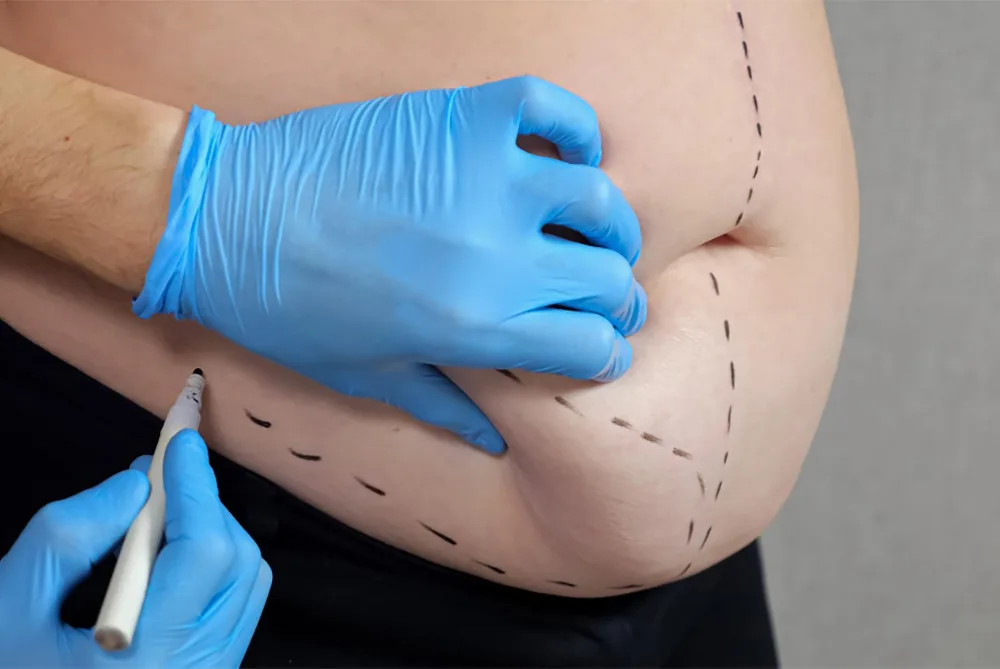
A lipectomy, also known as an excisional lipectomy, is a surgical procedure that involves removing large amounts of excess skin and underlying fatty tissue. Unlike liposuction, which uses small incisions and a cannula, a lipectomy requires larger incisions to cut away sections of skin and fat.
When is a Lipectomy Necessary?
A lipectomy is typically recommended for individuals with advanced-stage lipedema (Stage 3 or 4). In these stages, the volume of lipedema fat is substantial, and the overlying skin has been stretched to the point where it has lost its elasticity. Even if liposuction were performed to remove the fat, the skin would not be able to shrink back, resulting in large, uncomfortable folds of excess skin.
This excess skin can cause its own set of problems, including:
- Hygiene issues and skin infections (intertrigo) in the skin folds.
- Further impairment of mobility.
- Negative impact on body image and comfort.
How Does a Lipectomy Work?
During a lipectomy, the surgeon makes long incisions to remove large, wedge-shaped sections of skin and the attached lipedema fat. The remaining skin is then pulled taut and sutured closed. This procedure is often performed in combination with or after liposuction to achieve the best possible outcome. For instance, a surgeon might first perform liposuction to debulk the area and then perform a lipectomy to remove the resulting loose skin.
Common lipectomy procedures include:
- Thigh Lift: Removes excess skin and fat from the inner or outer thighs.
- Arm Lift (Brachioplasty): Addresses sagging skin on the upper arms.
- Panniculectomy: Removes the "apron" of excess skin and fat that hangs over the lower abdomen.
Benefits of a Lipectomy
- Removes Excess Skin: The primary benefit is the removal of loose, hanging skin that doesn't retract after significant fat loss.
- Improves Contour and Comfort: By creating a smoother, tighter body contour, a lipectomy can improve comfort and make it easier to find clothes that fit.
- Enhances Hygiene: Removing skin folds reduces the risk of rashes and infections.
Limitations and Considerations
Lipectomy is a more invasive procedure than liposuction. It results in longer scars and typically requires a more extended recovery period. Because it involves larger incisions, there is a greater risk of complications such as infection, poor wound healing, and more significant scarring. For this reason, it is essential to choose a highly experienced lipectomy surgery center with a deep understanding of the lipedema condition.
Liposuction vs. Lipectomy: A Direct Comparison
Feature | Liposuction | Lipectomy |
|---|---|---|
Primary Goal | Remove excess lipedema fat deposits. | Remove large amounts of excess skin and underlying fat. |
Best For | Early to mid-stage lipedema (Stages 1-3). | Advanced-stage lipedema (Stages 3-4) with poor skin elasticity. |
Technique | Small incisions, suctioning fat with a cannula. | Large incisions to excise skin and fat. |
Invasiveness | Less invasive. | More invasive. |
Scars | Small, discreet scars. | Long, more noticeable scars. |
Recovery | Shorter recovery period. | Longer and more complex recovery. |
Skin Elasticity | Requires good skin elasticity for best results. | Addresses poor skin elasticity by removing loose skin. |
Make an Informed Decision for Your Health
Choosing between liposuction and lipectomy is a significant decision that depends heavily on the stage of your lipedema and your individual health profile. Liposuction is the primary treatment for removing the diseased fat that causes pain and mobility issues, while lipectomy is a secondary procedure to address the excess skin that can result from massive weight loss or fat removal in advanced cases.
The best course of action is to consult with a surgeon who specializes in treating lipedema. An expert can accurately assess your condition, discuss your goals, and recommend a personalized treatment plan. This may involve liposuction alone, a lipectomy, or a combination of both procedures performed in stages.
If you are exploring surgical options for lipedema and are looking for a trusted lipectomy surgery center, we are here to help. The team at Byrd Lipedema Surgery Center is dedicated to providing compassionate and comprehensive care for individuals with lipedema. Contact us today to schedule your free consultation and take the first step toward a more comfortable and confident life.