Lipedema affects millions of women worldwide, yet many struggle to understand what their diagnosis truly means for their future. One of the most pressing questions patients ask is whether lipedema will continue to worsen over time. The answer is complex and depends on several factors that can influence the condition's progression.
Lipedema is indeed a progressive condition, meaning it typically worsens without proper treatment and management. However, understanding how it progresses and what factors influence its development can help you make informed decisions about your care and explore treatment options like lipedema surgery.
This comprehensive guide explores the progressive nature of lipedema, the stages of the condition, factors that influence its advancement, and treatment options available to help manage or halt its progression.
What Makes Lipedema Progressive?
Lipedema progresses through distinct stages, each characterized by increasing severity of symptoms and physical changes. The condition rarely improves on its own and tends to worsen gradually over time, particularly during periods of hormonal changes such as puberty, pregnancy, or menopause.
The progressive nature of lipedema stems from several biological mechanisms. Fat cells in affected areas become increasingly dysfunctional, leading to chronic inflammation and impaired lymphatic drainage. This creates a cycle where inflammation promotes further fat accumulation and tissue changes, which in turn generates more inflammation.
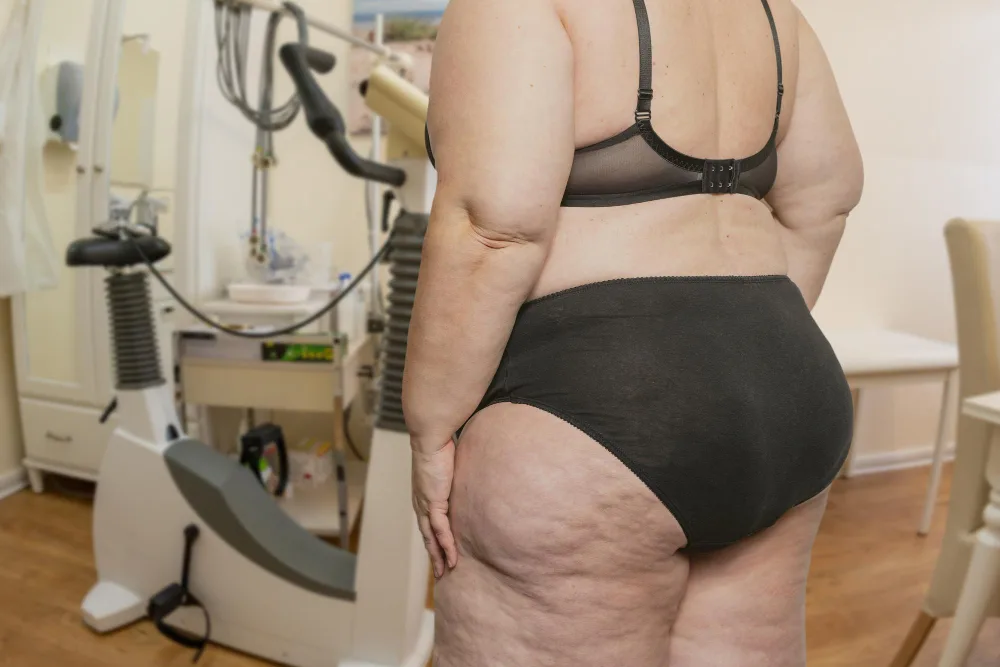
Unlike typical weight gain, the fat distribution in lipedema is disproportionate and symmetrical, typically affecting the legs, thighs, and sometimes arms while sparing the feet and hands. This distinctive pattern becomes more pronounced as the condition advances through its stages.
The Four Stages of Lipedema Progression
Understanding the stages of lipedema helps patients recognize where they are in the disease progression and what changes they might expect.
Stage 1: Early Development
During stage one, the skin surface remains smooth, but the underlying fat tissue begins to thicken. Patients may notice their legs feel heavy or tender, particularly at the end of the day. The fat distribution becomes noticeably disproportionate, with legs appearing larger compared to the upper body.
Many women in this stage report increased sensitivity to touch and bruising more easily than before. The characteristic "cuffing" effect at the ankles may begin to appear, where fat stops abruptly at the ankle, creating a distinct boundary.
Stage 2: Visible Changes
Stage two brings more noticeable physical changes. The skin surface develops an uneven, mattress-like texture due to enlarging fat lobules beneath the surface. Patients experience increased pain, swelling, and mobility challenges.
The disproportion between the upper and lower body becomes more dramatic during this stage. Daily activities may become more difficult due to increased leg heaviness and discomfort.
Stage 3: Advanced Progression
By stage three, large lobules of fat create significant deformities in the leg shape. The skin becomes increasingly uneven with deep folds and overhanging tissue. Pain levels typically increase substantially, and mobility becomes significantly impaired.
Patients in this stage often experience secondary complications, including skin problems, increased infection risk, and substantial impact on quality of life.
Stage 4: Severe Complications
Stage four represents the most advanced form, where lipedema combines with lymphedema (called lipo-lymphedema). Significant swelling extends to the feet and hands, and the risk of serious complications increases dramatically.
This stage requires immediate medical intervention and often involves multiple treatment approaches to manage both the lipedema and lymphatic complications.
Factors That Influence Lipedema Progression
Several factors can accelerate or potentially slow the progression of lipedema. Understanding these can help patients make lifestyle choices that may impact their condition's development.
Hormonal Changes
Estrogen fluctuations play a significant role in lipedema progression. The condition often worsens during puberty, pregnancy, menopause, or when taking hormone replacement therapy. While patients cannot completely control hormonal changes, working with healthcare providers to manage hormone levels may help slow progression.
Weight Fluctuations
Although lipedema is not caused by obesity, significant weight gain can worsen the condition. The affected areas tend to accumulate fat more readily, potentially accelerating progression through the stages. Maintaining a stable, healthy weight through balanced nutrition may help slow advancement.
Physical Activity Levels
Regular exercise, particularly activities that promote lymphatic drainage, may help manage symptoms and potentially slow progression. Swimming, walking, and other low-impact exercises can improve circulation and reduce inflammation.
Trauma and Surgery
Physical trauma to affected areas, including some types of surgery, can trigger rapid progression in some patients. This is why specialized lipedema surgery techniques are crucial for patients considering surgical intervention.
Treatment Options and Progression Management
While lipedema is progressive, various treatment approaches can help manage symptoms and potentially slow its advancement.
Conservative Management
Early-stage lipedema often responds well to conservative treatments including compression therapy, manual lymphatic drainage, and exercise programs. These approaches focus on improving lymphatic function and reducing inflammation.
Compression garments help support affected tissues and improve circulation, while specialized massage techniques can reduce swelling and discomfort. However, conservative treatments typically become less effective as the condition progresses to later stages.
Surgical Intervention
Lipedema surgery, specifically specialized liposuction techniques, represents the most effective treatment for removing the diseased fat tissue and potentially halting progression. Unlike traditional liposuction, lipedema surgery uses gentle techniques designed to preserve the lymphatic system while removing problematic fat deposits.
Several specialized surgical approaches have been developed specifically for lipedema, including tumescent liposuction, water-assisted liposuction (WAL), and power-assisted liposuction (PAL). These techniques can dramatically improve symptoms, restore more normal body proportions, and potentially prevent further progression when performed by experienced surgeons.
The timing of lipedema surgery is crucial. Earlier intervention often leads to better outcomes and may prevent the condition from advancing to more severe stages. Patients in stages two and three typically see the most dramatic improvements, though even stage four patients can benefit significantly from surgical treatment.
Long-term Outlook and Quality of Life
The progressive nature of lipedema means that without treatment, patients can expect their symptoms to worsen over time. However, with appropriate treatment, including lipedema surgery when indicated, many patients experience significant improvement in their symptoms and quality of life.
Early intervention is key to achieving the best outcomes. Patients who seek treatment in the earlier stages of lipedema often have more treatment options available and may prevent progression to more severe stages.
Taking Control of Your Lipedema Journey
Understanding that lipedema is progressive empowers patients to take proactive steps in managing their condition. While the disease naturally worsens over time, you have options to slow its progression and significantly improve your symptoms and quality of life.
The most important step is working with healthcare providers who understand lipedema and can develop a comprehensive treatment plan tailored to your specific stage and symptoms. This may include conservative management in early stages or surgical intervention for more advanced cases.
If you're considering lipedema surgery, contact Byrd Lipedema Surgery Center today to schedule a consultation. Our specialized team can evaluate your condition, discuss your treatment options, and help you determine the best approach for managing your lipedema progression.